
A record number of Americans are expected to travel over the Independence Day holiday, with transportation analysts warning that drivers who wait until the afternoon could face the longest delays of the week.
The American Automobile Association projects 72.2 million Americans will travel at least 50 miles from home during the July Fourth travel period, which began June 27 and runs through Sunday.
Recommended Stories


Of the millions traveling, 61.4 million are expected to drive, or about 85% of all holiday travelers, despite gas prices sitting above last year’s levels.
According to transportation analytics firm INRIX, which works with AAA, the busiest driving period began Thursday and will continue through the weekend. The worst time to be on the road Thursday is expected to be between 2 p.m. and 6 p.m., followed by noon to 7 p.m. Friday.
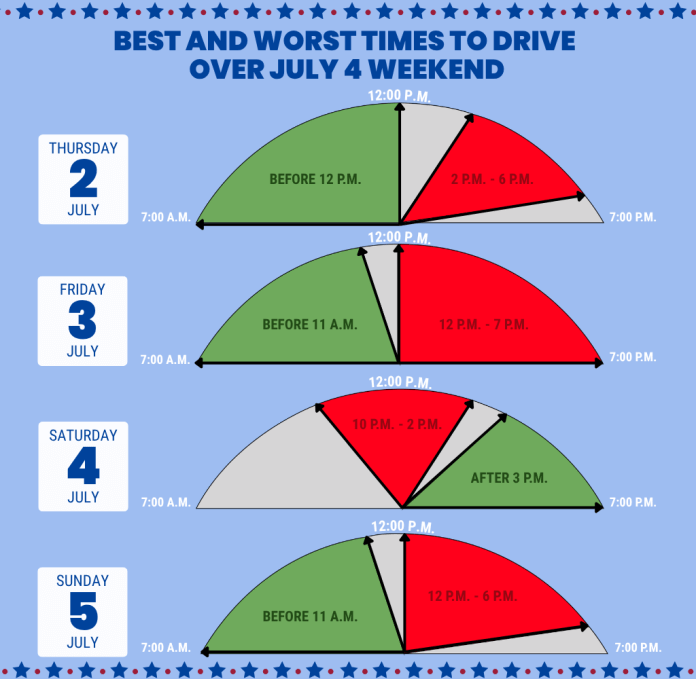
On Independence Day, traffic is expected to peak from 10 a.m. to 2 p.m. before easing later in the afternoon. In Washington, D.C., AAA predicts the peak congestion period will be Friday around 12:45 p.m. The D.C. Department of Transportation encourages visitors and residents to use public transportation, as the district expects a surge in tourism ahead of celebrations.
Travelers returning home Sunday should try to avoid driving between noon and 6 p.m., when highways are forecast to be most congested.
For those with flexible schedules, AAA recommends leaving before noon on Thursday, before 11 a.m. Friday, after 3 p.m. on Saturday, and before 11 a.m. Sunday to avoid the heaviest traffic.
The holiday rush comes as much of the country continues to experience dangerous summer heat. Forecasters have warned that above-average temperatures across large portions of the United States could create hazardous conditions for motorists, increasing the risk of vehicle breakdowns and heat-related illness for travelers spending extended periods outdoors.
While fuel prices remain elevated, motorists have seen some relief at the pump in recent days as crude oil prices retreated. According to AAA, the national average price of gas per gallon has steadily dropped from one month ago, falling about $0.45 per gallon from last month. As of Thursday, the average price per gallon of gasoline was $3.84.
TOURISM NUMBERS UP IN WASHINGTON FOR FOURTH OF JULY
Air travel is also expected to remain busy, with AAA forecasting nearly 5.9 million domestic flyers over the weekend, while another 4.9 million Americans are expected to travel by bus, train, or cruise.
The Transportation Security Administration expects to screen 18.7 million travelers by the end of the peak travel period, which it says is from June 30 to Monday. TSA said the highest passenger volume will come Thursday, with more than 3 million people expected to be screened.
