The ruling on the Supreme Court’s biggest case of the term is in. The court found in Trump v. Barbara that the 14th Amendment guarantees citizenship to the children of illegal immigrants born in the United States. Our legal system will continue handling anchor babies the same way it has for years.
As problematic as this ruling is, it must be said that much of the response opposing it has also been rather bad. Populist drivel has successfully made the conversation radioactive. The people who sacrifice principles in the name of expediency are now saying that the situation warrants everything from forced sterilization of foreigners to repealing the 19th Amendment (all the female justices were in the majority).
Recommended Stories


But there is a more sane way to oppose the decision. While the majority opinion gave an impressive historical run-through to justify their decision, what it left out is crucial.
As often happens when he’s in the minority, Justice Clarence Thomas’s dissent is far more insightful than the majority opinion is. Totaling an astounding 91 pages compared to the majority opinion’s 26, the eldest justice shows his depth of knowledge once again. Thomas references a speech given by Sen. Jacob Howard, the man who actually wrote the citizenship clause of the 14th Amendment. Rising in support of ratification in 1866, Howard explained:
“This will not, of course, include persons born in the United States who are foreigners, aliens, who belong to the families of ambassadors or foreign ministers accredited to the government of the United States, but will include every other class of persons.”
If words like “foreigners” and “aliens” do not describe our illegal immigrants, then who knows what does?
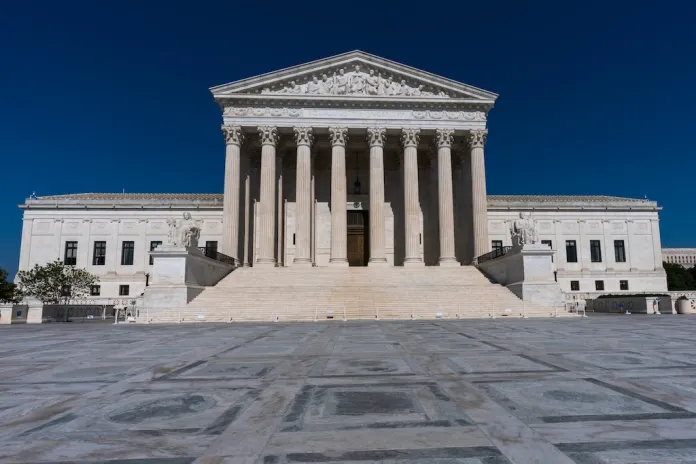
The majority opinion did not address this issue once. The result, says Thomas, is that the court has repurposed the 14th Amendment “for political projects that the Reconstruction Congress did not support.”
In the originalist framework most of the Supreme Court now operates under, this speech should be one of the defining pieces of evidence. In, say, Second Amendment jurisprudence, a letter from George Mason can matter more than royal decrees confiscating firearms and modern gun control legislation because of his status as a framer of our government. His words, especially, help determine the original intent of our laws, as someone who helped write them.
Likewise, there is precedent both before and after the ratification of the 14th Amendment that supports the majority’s decision, but whether these should justify overpowering the intentions of the amendment’s framers is highly questionable. After all, this court is no stranger to overturning long-standing precedent in the name of original intent. It probably should have done so again, but alas.
SUPREME COURT HANDS WOMEN AND GIRLS A MONUMENTAL VICTORY
Thomas writes, “I am not sure that today’s opinion will stand the test of time.”
Due to the failure to address the issue of the 14th Amendment’s framers, his skepticism is justified. If the court does not want its decision to be a point of controversy for years to come, it must reconsider the issue with due regard to the framers.