In Focus delivers deeper coverage of the political, cultural, and ideological issues shaping America. Published daily by senior writers and experts, these in-depth pieces go beyond the headlines to give readers the full picture. You can find our full list of In Focus pieces here.
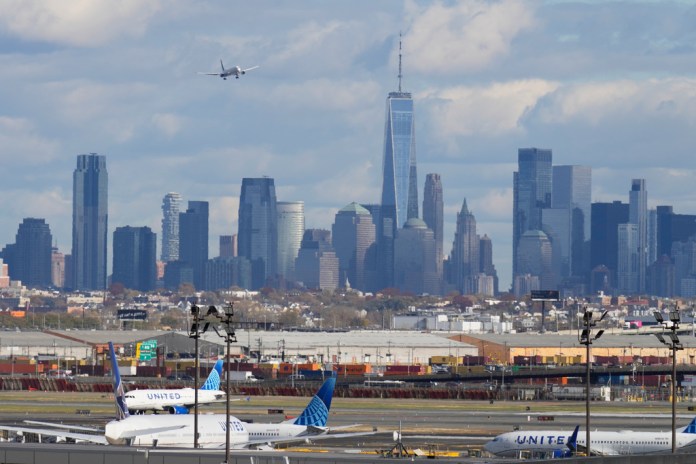
To many conservatives, New York looks like the culmination of progressive politics: a city governed by the Left and pushing steadily further in that direction. A new poll of the city’s own Democrats suggests a more complicated reality. New York is one of the places in America that looks like a one-party state: Registered Democrats outnumber Republicans roughly 6 to 1 as of late 2024, and the Democratic primary, not the general election in November, is where power actually changes hands. Yet that lopsided advantage may say more about the rules than about any genuine partisan loyalty.
Recommended Stories


A survey commissioned this month by the reform groups Open Primaries and the Independent Voter Project found that only 40% of New York City’s registered Democrats describe themselves as proud members of the party. Nearly as many, 39%, say they are actually independents who registered as Democrats for one reason: In a city with closed primaries, it is the only way to cast a meaningful vote. Among Latino Democrats, only about 1 in 3 still consider themselves Democrats at all, the survey found, the lowest figure of any group surveyed.
The organizations that ran the poll want open primaries, and they frame these voters as prisoners of a rigged system. Set the advocacy aside, and a more interesting fact remains: The most Democratic big city in the country is, by its own residents’ account, far less Democratic than its registration rolls suggest. A plurality of the party’s own members wear the label the way a commuter carries an E-ZPass — not out of loyalty, but because the toll booth leaves almost no other way through.
For conservatives, the temptation will be to read this as straightforward good news, and up to a point, it is.
The disaffection in New York is not an island. Nationally, a record 45% of Americans now tell Gallup they are independents, the highest share in more than three decades of polling, while Democrats and Republicans are tied at just 27% each. Among Generation Z, a clear majority declines to claim either party. The red-blue binary that has organized American politics for two generations is being abandoned by the very voters who will decide the next two.
The trend is visible even in the bluest precincts. Between 2020 and 2024, Democratic registration in New York City fell by roughly 7%, more than a quarter-million voters, while the number of New Yorkers registered to no party at all climbed past 1.1 million. Trump won about 30% of the city’s vote in 2024, up from roughly 23% four years earlier and the best Republican showing there since the 1980s. The wall conservatives were told could never be breached contains more cracks than either party wants to admit.
The Latino numbers deserve special attention because they are the leading edge of the whole story. That only a third of New York’s Latino Democrats still think of themselves as Democrats is not a quirk of the five boroughs; it tracks a national drift that has unsettled strategists in both parties since 2024. For a generation, the Left assumed these voters were a permanent bloc and the Right assumed they were unreachable. Both assumptions were misguided, and both are collapsing. Their movement toward Republicans in 2024 was not uniform, but it was large enough to shatter assumptions that demography alone determines political destiny. Latino voters, disproportionately working-class, religious, and entrepreneurial, were never an obvious fit for a party increasingly defined by the cultural preoccupations of the college-educated. But voters whom the Left has taken for granted are not voters the Right has earned.
Conservatives have spent years being lectured that the cities, the young, and the rising Latino electorate are lost to them by demography and destiny. The New York numbers say otherwise. These are not citizens who have fused their souls to progressivism. Many are simply unhappy, unattached, and available.
Yet the same evidence that should encourage conservatives ought also to humble them. Political homelessness is not the same thing as political conversion.
The voters coming loose from the Democratic Party are not, for the most part, becoming Republicans. They are becoming unmoored. Coalitions built from dissatisfaction are inherently unstable; a voter who leaves one party has not necessarily joined another. A coalition of the disaffected is not a movement of the convicted. It is rented, not owned, and the lease is short.
This is the part conservatives forget when they mistake the Left’s weakness for their own strength. The 39% of New York Democrats who registered only to vote did not convert to anything. They found a workaround. Win their ballot in one election and you have won a transaction, not an allegiance, and transactions are reversed at the first sign of buyer’s remorse. A protest vote is a judgment on the incumbent, not a mandate for the challenger
The deeper truth is that the thinning of party identity is not an isolated political event. It is one expression of a much larger erosion, the wearing away of the institutions that stand between the individual and the state, the ones that once gave Americans durable belonging. The same decades that hollowed out the parties hollowed out the unions, the congregations, and the neighborhood associations — the little platoons Burke prized and Tocqueville saw as the genius of American democracy. The phantom Democrat who registers for access and feels nothing for the party is cousin to the nominal congregant who appears twice a year and the union member who knows only the dues. Across American life, the label has outrun the loyalty.
Conservatives, of all people, should recognize the pattern and resist the easy half of it. The right is not immune to the disease it is tempted to exploit. Its own coalition has, in recent years, often rallied around a personality as much as a creed, and a movement organized around a man is subject to the same short lease as a coalition organized around grievance. To celebrate the unmooring of the other side while ignoring the unmooring of one’s own is to mistake a symptom for a cure.
The lesson is visible throughout contemporary politics. In a hollow system, victory goes not to the side with the most latent sympathizers but to the side willing to organize, register supporters, and turn passive agreement into active participation.
Which is why the right response to New York’s phantom Democrats is not to harvest them but to offer them something worth belonging to. The disaffection is real; so is the opening. But disaffection alone builds nothing. It is the political equivalent of clearing a field, necessary perhaps, but not the same as planting one.
A serious conservatism would treat these unattached citizens not as a harvest to be gathered before the next cycle but as neighbors to be re-rooted: in institutions that form rather than merely mobilize, in communities that ask for membership rather than just a vote, in a civic life that transmits something from one generation to the next instead of renting attention from one election to the next. That is harder than running an ad against an unpopular incumbent. It is also the only thing that lasts.
BLUE CITIES EMBRACE SOCIALISM. SWING STATES WON’T
The most revealing fact about New York is not that one of the bluest cities in America is less blue than its registration rolls pretend. It is that the country is less attached than any of its institutions admit, and that this is a wound, not merely an opportunity. Conservatism has always claimed to understand, better than its rivals, that free people are held together not by the state and not by the campaign but by the dense web of associations in which they actually live.
The phantom Democrats of New York are an invitation to prove it. The question is whether the Right wants merely to borrow these voters for one election or build the institutions that might persuade them to stay for a generation.
