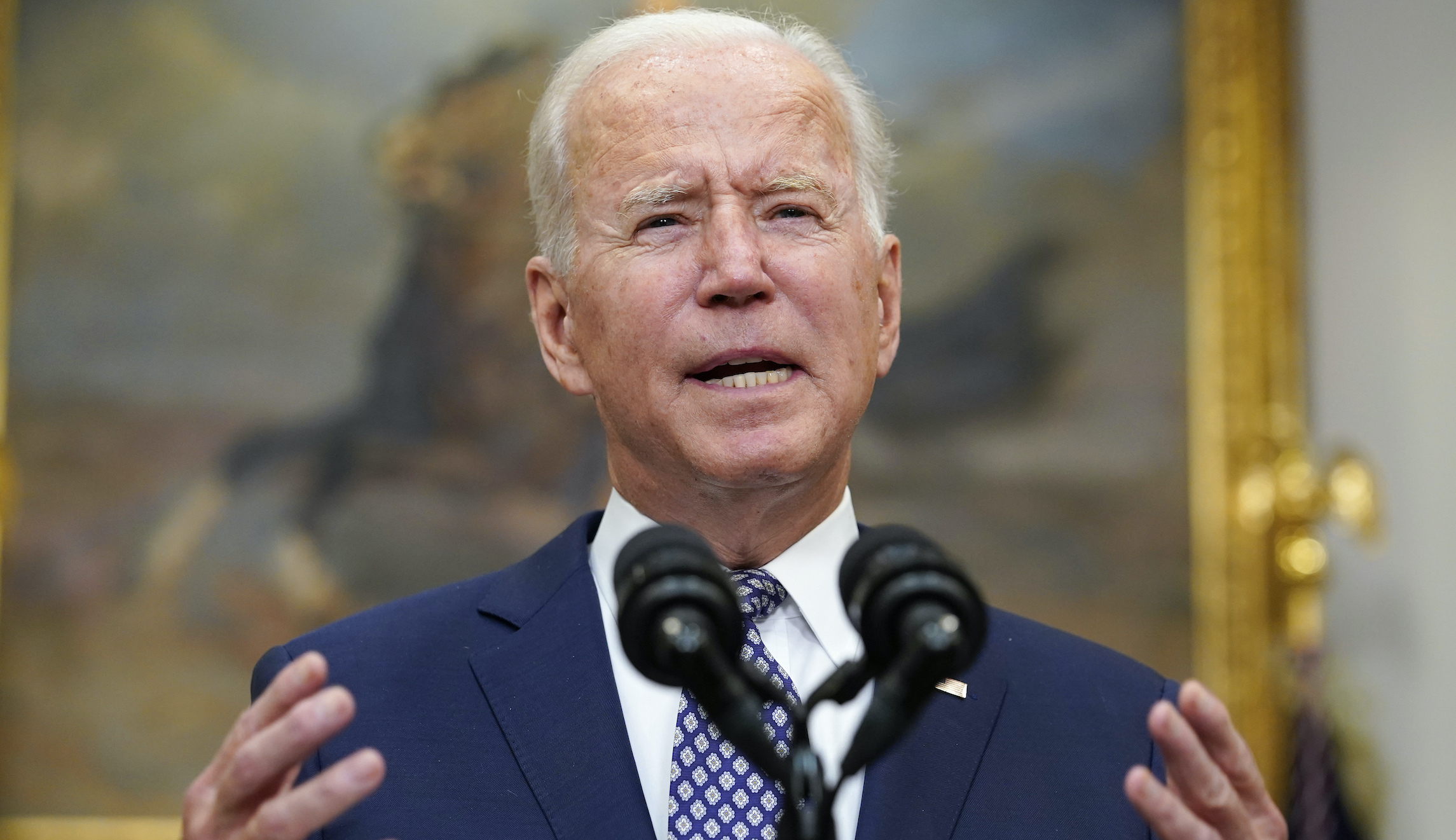
President Joe Biden, elected on a promise to restore calm to the White House, contributed to the sense of panic and chaos permeating Afghanistan after his decision to keep the Aug. 31 withdrawal deadline was leaked.
A scrambled schedule and qualified statements Tuesday amid threats from the Taliban that they would not allow Afghans to leave only heightened the confusion, which has defined Biden’s botched withdrawal after the insurgent group seized control of Afghanistan faster than expected.
Recommended Stories



WHITE HOUSE FIGHTS TO REGAIN CONTROL OF ITS MESSAGE ON AFGHANISTAN
Biden’s remarks, in which he announced his decision to stand by his Afghanistan withdrawal deadline, were added to his schedule late Monday and then delayed for four hours until Tuesday afternoon. In the meantime, reports emerged the United States had already started drawing down some of the 5,800 troops deployed to Kabul’s international airport for the evacuation operation.
“Every day we’re on the ground is another day we know that ISIS-K is seeking to target the airport and attack both U.S. and allied forces and innocent civilians,” Biden said at the White House. “We’ve already had some gunfighting break out. We run a serious risk of it breaking down as time goes on.”
But Biden’s speech and White House press secretary Jen Psaki’s comments Tuesday did not clarify the U.S. cleanup mission in Afghanistan and left open the possibility of service members remaining in the country.
During her late briefing, Psaki underscored the U.S. withdrawal was dependent on the Taliban’s cooperation. However, she was unsure whether the deadline elapsed at noon, midnight, local time, or Eastern Standard Time.
“He asked for contingency plans but believes we have continued to be on track to accomplish our mission,” she said.
Psaki disputed the perception the U.S. was abandoning Americans “stranded” in Afghanistan as the Taliban harden checkpoints around the airport.
But Psaki was less confident concerning Afghan allies and those vulnerable to Taliban recriminations. She was specifically reluctant to say how many had to be evacuated from Afghanistan for the mission to be deemed a success. Scores of Afghans have braved the precarious security situation and squalid living conditions at the airport in the hope of boarding a flight out.
“Our expectation, which we’ve also conveyed to the Taliban, is that they should be able to get to the airport,” she said.
The White House has bungled its communications strategy before and since the collapse of the Western-backed Afghan government.
This week, the communications team seemed to respond to criticism regarding Biden departing the White House for Delaware and Camp David and not answering questions about Afghanistan as footage of Afghans clinging to U.S. military planes was broadcast around the world.
But Tuesday exacerbated the idea that Biden was out of his depth, despite campaigning on experience and foreign policy expertise. He was especially criticized for appearing to kowtow to terrorists after CIA Director William Burns met with Taliban leader Mullah Abdul Ghani Baradar in Kabul while he bucked international partners, such as British Prime Minister Boris Johnson, who asked him to stay in Afghanistan longer.
It is a “tough time” for Biden with Afghanistan’s implosion, the COVID-19 pandemic’s stubborn persistence, and the uncertain status of his infrastructure, climate, and social welfare proposals currently under consideration by lawmakers, according to the Brookings Institution’s Darrell West.
“He has to demonstrate he can handle crises and keep things on a level footing,” he told the Washington Examiner. “The next few months will determine the resiliency of his presidency.”
How Biden manages the competing problems will indicate whether Democrats hold on to congressional power after next year and the president’s own reelection prospects in 2024, should the 78-year-old run for a second term, West said.
Republican strategist John Feehery queried whether Biden had the energy and strategic insight to deal with all the issues. He contended Afghanistan was Biden’s Hurricane Katrina. Former President George W. Bush’s popularity cratered after the 2005 storm, which killed 1,800 people and caused $125 billion in damage.
“What they want is stability, normality, and a return to some sort of semblance of normalcy, and what they’re getting is tax increases and disaster in Afghanistan,” Feehery said. “These are some critical moments for Biden, and he’s bitten off a lot more than he can chew.”
Biden is being tested early with high-stakes consequences, and his once-steady job approval numbers have begun to dive. That bodes poorly for the midterm election cycle.
Biden’s average approval hovers around 46.6% and his disapproval 48.9%, according to RealClearPolitics. The figures are flipped, according to FiveThirtyEight, which has his approval at about 48.4% and disapproval 46.1%.
A USA Today/Suffolk University poll published Tuesday found 41% of respondents approve of Biden’s job performance, although 55% do not. Half approved of the president’s handling of the pandemic, almost two-fifths said the same of the economy, and roughly a quarter of the Afghanistan withdrawal.
CLICK HERE TO READ MORE FROM THE WASHINGTON EXAMINER
An estimated 5,100 U.S. citizens have been evacuated from Kabul, including embassy personnel and contractors, since Aug. 14. Early data suggest up to 15,000 Americans and 65,000 Afghans seeking special immigrant visas need help.
