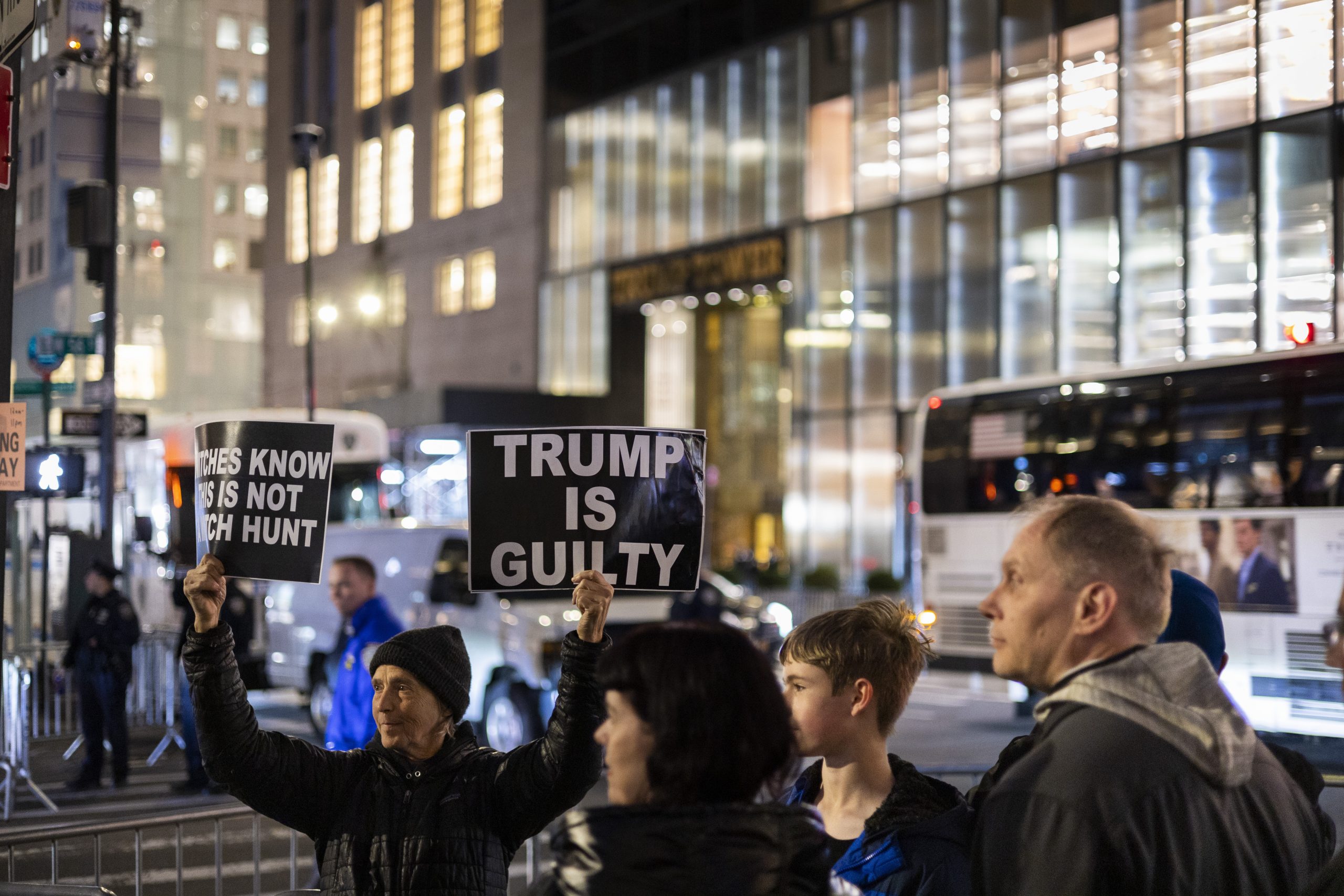
Former President Donald Trump has been indicted on a slew of criminal charges, including 34 counts of falsifying business records in the first degree, according to the unsealed court records released on Tuesday afternoon.
Recommended Stories


Manhattan Judge Juan Merchan announced the felony charges during Trump’s initial court appearance on Tuesday afternoon, marking the first time a former president has been criminally charged in U.S. history. Trump pleaded not guilty to all 34 counts.
TRUMP’S GAME PLAN TO SLOW DOWN CRIMINAL CASE
The charges come one day after Trump arrived in New York for the criminal proceedings, which the former president has repeatedly denounced as being baseless and politically motivated.
Trump will now head back to his Mar-a-Lago home in Florida, where he’ll address his supporters in an address Tuesday evening. It’s not clear what comments Trump will make during that address because Merchan warned the former president not to make social media posts that could stir unrest among his supporters.
The judge also expressed concerns about Trump posting sensitive information about the case on social media, but his attorneys told reporters on Tuesday that would not happen. However, his lawyers declined to say whether they have advised Trump on what he should post online.
The indictment was unsealed shortly after Trump’s arraignment proceedings concluded on Tuesday, which detailed the 34 felony counts levied against the former president. The court records claim Trump, on multiple occasions, made false business entries “with intent to defraud and intent to commit another crime.”
In the court documents, Manhattan District Attorney Alvin Bragg accused Trump of orchestrating a “catch and kill” scheme during the 2016 presidential cycle to identify negative stories about him and pay large sums of money to bury them from public view. After making such payments, Trump is accused of hiding such conduct by making “dozens of false entries in business records to conceal criminal activity, including attempts to violate state and federal election laws.”
“That is exactly what this case is about: false statements made to cover up other crimes. These are felony crimes in New York state, no matter who you are,” Bragg told reporters after Trump’s arraignment. “Why did Donald Trump repeatedly make these false statements? The evidence will show that he did so to cover up crimes relating to the 2016 election.”
The “catch and kill” scheme lasted from August 2015 to December 2017, according to court records.
In one instance, former Trump attorney Michael Cohen wired $130,000 to an attorney to be transferred to porn star Stormy Daniels to keep quiet about an alleged sexual affair. Cohen later pleaded guilty to the illegal campaign contribution charge in 2018.
After winning the 2016 election, Trump then began reimbursing Cohen through monthly checks through both the Donald J. Trump Revocable Trust and then later from the former president’s bank account. Trump issued a total of 11 checks, according to the indictment. Nine of those checks were signed directly by Trump himself, and all 11 were processed by the Trump Organization and were listed as legal payments.
In total, Trump allegedly made 34 false entries in his New York business records to conceal the $130,000 payment, according to the indictment.
“He could not simply say that the payments were a reimbursement for Mr. Cohen’s payments to Stormy Daniels [because] to make that true statement would have been to admit a crime. So instead, Mr. Trump said that he was paying Mr. Cohen for fictitious legal services in 2017 to cover up actual crimes committed the prior year,” Bragg said. “This case today is one with allegations like so many other white-collar cases — allegations that someone lied [about] again and again to protect their interests and evade the laws, to which we are all held accountable.”
Trump arrived at the Manhattan courthouse at 1:25 p.m. for his arraignment, waving to a full street of supporters who had been lining the streets for hours prior to his arrival. Some had even camped out overnight in anticipation of his court appearance.
Law enforcement officers in New York have increased security detail around the courthouse ahead of Trump’s appearance, with Mayor Eric Adams warning protesters not to get too rowdy — specifically calling out Rep. Marjorie Taylor Greene (R-GA), who led a protest outside the courthouse on Tuesday.
“While there may be some rabble-rousers thinking about coming to our city tomorrow, our message is clear and simple: Control yourselves,” Adams said.
Greene shot back at Adams, accusing the New York mayor of using intimidation tactics to silence opposition.
“Delusional [Eric Adams] is trying to intimidate, threaten, and stop me from using my 1st amendment rights to peacefully protest the Democrat’s unconstitutional weaponization of our justice system against our top Republican Presidential candidate, President Trump,” she tweeted. “Should I be the one concerned that the mayor of NYC will weaponize his government or maybe his thugs like DA Alvin Bragg against me?”
The charges come after a grand jury in Manhattan voted on Thursday to indict the former president on charges related to the hush money case that emerged during his first White House bid in 2016.
Reports of a looming indictment emerged after Cohen testified before the Manhattan grand jury multiple times earlier this month.
CLICK HERE TO READ MORE FROM THE WASHINGTON EXAMINER
Manhattan prosecutors later opened an investigation into whether Trump falsified business records to list the reimbursement as a legal expense.
At the time of Cohen’s trial, federal prosecutors did not press charges against Trump due to guidance from the Justice Department that a sitting president cannot be charged with a crime. However, prosecutors revived discussions about possible charges shortly before Trump left office in 2021. The federal government did not ultimately charge Trump.
